This is How I Pause: I Spend Time with God in the Garden
Athane Scholtz is a media and communications specialist and trainer, journalist, writer, and editor. She is passionate about sharing skills that can better connect people to each other, and motivating others to have faith in God’s Plan and the bigger picture of His purpose for all His people. Today she shares with us how she pauses and connects with God.
THIS IS HOW I PAUSE: I SPEND TIME WITH GOD IN THE GARDEN
I get why God chose to walk with Adam in the Garden.
Yes, it was calm, and cool and pretty, but I think it was also because there were so many life lessons to learn in that Garden.
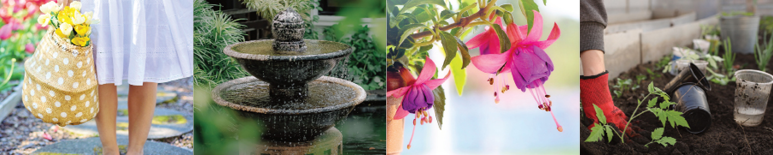
People have all kinds of noble reasons why they do gardening, like working with life-giving soil and marvelling at God’s creation, but my reasons are generally more about self-preservation.
It’s where I can be alone with my thoughts. My teenagers know better than to hang around me in the garden, unless they want to be instructed to start pulling out weeds, so it is my escape plan. I can claim it is ‘work’ as it is part of important house maintenance, but actually for me it is leisure time.
Gardening is where I let my brain run free with unorganised thoughts, dreams, and talks. I make no effort to arrange the themes. I think of the things I wanted to say out loud when I was frustrated, the words I intended to speak when I was rendered speechless, or the phrases I longed to put together when I failed to define a situation accurately. I ponder on house alterations and clothing choices. I meditate on talks I have watched, music I have heard, books I have read. I weigh up options, consider expenses and think about opportunities.
Somewhere in between the messy thoughts, haphazard feelings and gardening activities, God speaks to me.
In my garden I have learnt the importance of care. That even the most hardy, self-sufficient species will reward you with something special when you make an effort to find out what you can do to make it thrive.
I am intrigued by the many ways that weeds and unwanted vegetation are extraordinary survivors growing in the most inhabitable crevices and unfriendly sun-baked clay, while indigenous fynbos that grow wild on the mountain slopes above my house refuse to flourish in the comparably protected environment of my garden down below.
God speaks to me about the potential of seed. Not only that of beautifully pruned and fertilised garden plants but also the seeds of weeds that will grow where others falter.
I have seen deeper meaning in the entanglements of invasive ivy, the importance of finding the root of the evil, and severing the root hairs that will continue feeding off a host plant until it has sucked the life right out of it.
I am not a good grower of edible plants, but the lesson of reaping what you sow has always made an impression on me. The fact that you can’t plant apples and expect pears, and that soil preparation is crucial to the health and nutritional value of the fruit.
God speaks to me about plants that grow irrespective of the circumstances while others only flourish in the place for which they were created.
I think He smiles at my propensity for aggressive pruning and at the satisfaction I derive from thinning out the woody branches of overgrown vegetation. I think He agrees that a decent pruning is worth the endless piles of leafless branches, and He shares in my appreciation of feisty shrubs pushing out crisp green leaves and flower buds in defiance of a severe cut-back.
In my garden God reminds me of his provision. That He dresses the flowers in prettier garments than the wardrobes of royalty. That I am worth much more than the flowers and should have faith that He is my Father and knows what I need. That I must only seek his Kingdom and his righteousness, and that the rest will be given to me anyway.
God likes using garden imagery like that in Matthew 6 to talk to us about his Kingdom and his nature. There are so many principles to explore in the way in which life starts, grows, develops, flourishes, and dies, all of which are depicted one way or another in the Word of God. I challenge you to find those references and to internalise them as part of your connecting with Him.
The next time you are in the garden, be it your own or another’s, be it formal or in nature, pause and open your spiritual senses to what God has to say to you. So, you too can reach the full potential of the seed He has planted in you. Amen.