July – Week 3
This is How I Pause: I Read & Write God-inspired Poetry
Ruth is a friend, designer and writer who does freelancing at a vivid life. From a young age she has enjoyed anything creative, from fashion to photography, self-directed plays to song-writing, designing to painting, and the list goes on! This week she shares with us another way to pause.
THIS IS HOW I PAUSE: I READ & WRITE GOD-INSPIRED POETRY
C.S. Lewis once wrote: “Every poem can be considered in two ways – as what the poet has to say, and as a thing which he makes. From the one point of view it is an expression of opinion and emotions; from the other, it is an organization of words which exist to produce a particular kind of patterned experience in the readers.” [1]
One thing that personally attracts me to poetry is being able to empathize with someone as they creatively, or very simply, express their thoughts and experiences. To me, it became a very beautiful yet mystified notion that a commonality of feelings and words, translated into rhythmic writing, can have the power to affect my thoughts. Even now as I am studying the book of Psalms – a book of 150 Hebrew poems from different periods in Israel’s history – I can’t help but empathise with the anxiousness, mourning, joy, and praise that David and the other Psalmists felt while writing. If my heart can be moved by such an expressive language form, surely poetry can be used as a witnessing tool towards our friends, family, and ministries. How much more would an unbelieving friend be willing to read a heart-felt poem than to listen to a sermon – and yet the Gospel can be carried in both.
Poetry has the power to unfold in the unforced rhythms of grace. When words cannot explain a single moment and your heart frantically tries to piece sentences together to try and communicate the boundless joy you receive from our King. We serve a God of all grace and restoration, who has called us to His eternal glory to Christ (1 Peter 5:10 NIV). [2]
Below is a poem written by my talented friend and poet Marguerite Francoise Naude. May you find that through the lines of this poem, God speaks to you, and you hear His call on your life into eternal glory through His son, Jesus Christ…
The unforced rhythms of grace
He who commands the beginning of a harvest
Appoints the workers to tend to His land
He places the sun in position to light the day
And paints the skies with a gentle stroke of His hand.
For You stir the waves to come crashing at Your feet
And still a surging sea to obey Your instruction
The roaring ocean will resound in songs of Your praise
As you bring beauty from ashes and deliverance from destruction
The mountains move to make straight the paths of the Lord
As all creation seeks to gaze upon Your face
Every knee will bow and every tongue will confess
As the earth moves to the unforced rhythms of Your grace. [3]
Poetry is a matter of life, not just a matter of language.[4] It is a beautiful way to pause and breakaway from the busyness of the world. I find that whether you are reading it or writing it yourself, poetry requires authenticity. It is a practice that requires removing one’s sense of control over sentence structure and language and embracing a feeling of raw relatability to what is being expressed.
Ponder on this: Why do we as Christians so often revert to the Psalms as a stimulus for prayerful reflection?“The Psalms give us the means to come to prayer in a fresh state of mind. They enable us to see that we’re not the first to feel God is silent when we pray, nor are we the first to feel immense anguish and bewilderment while praying. The Psalms offer us ways to rejoice in prayer, to bow in worship, to exalt God for all he does and for all his blessings to us.” [5]
May you learn to embrace the “unforced rhythms of grace” through poetry, as a way in which to pause and breath.
To read more of Marguerite’s poetry, click the following link: https://theunforcedrhythmsofgracepoetry.wordpress.com/
[1] ‘A Preface to Paradise Lost’ written by C.S. Lewis
[2] https://theunforcedrhythmsofgracepoetry.wordpress.com/2019/09/12/what-are-the-unforced-rhythms-of-grace-2/
[3] https://theunforcedrhythmsofgracepoetry.wordpress.com/2019/09/10/the-unforced-rhythms-of-grace/
[4] Lucille Clifton
[5] https://www.odt.co.nz/opinion/importance-psalms-and-reasons-use-them

July – Week 1
This is How I Pause: I help Others Relax through journaling & Poetry
Amy van der Westhuizen is an aspiring full-time missionary, currently based in George, Western Cape, South Africa. At present, she is getting equipped for long-term missions through media training presented by Kollide Media in George. Amy has a heart for people and a passion for writing and language, and wishes to see people getting reached and inspired to glorify God by going to the nations through media.
THIS IS HOW I PAUSE: I CONNECT WITH GOD THROUGH JOURNALING AND POETRY
It’s like breathing
As imitators, trying to breathe life into a page
It’s like surrendering
Laying your heart bare before the One
Who formed its sinews
It’s like worshipping
Proclaiming, Holy Holy Holy…
It’s like breathing
Breathing back his Life
as our only worthy offering
To Him who is worthy of every breath.
If I were to describe writing and poetry – even our larger expression of creativity in its entirety – it is perhaps more aptly described as a bouquet of flowers put together by a little girl, desiring to be like her father who is a renowned horticulturist: She picks those bright blossoms passionately from her father’s carefully cultivated nursery, bunching them together unceremoniously as she runs toward him, exclaiming, “I want to show you something, daddy!” Though her arrangement is haphazard and carries only the slightest reflection of his vast and masterful cultivation, the pleased smile of her father never ceases to appear as she runs toward him. And ever-proudly, he places the flowers – in its whimsy, flimsy form – in the awaiting vase upon his work table.
The Father cherishes our time of communion with Him, whatever it may look like – whether it is in the form of prayer, song, a poem, art, or journaling, He enjoys our haphazard bouquets that we bring to Him.
I want to write this, partly as an encouragement to those that feel their ‘small’ talents are not a worthwhile form of worship. I want to tell you that it is. Or it can be, if it is something that you do to the glory of God. Those seeds of passion that the Lord has planted that we deem too small… The ones we tend to bury, to forget… I want to challenge us to start watering them! In John 4:23, Jesus speaks of true worship, saying the following:“But the hour is coming, and is now here, when the true worshipers will worship the Father in Spirit and truth, for the Father is seeking such people to worship Him.”
I would like to encourage us then, to worship in spirit and truth, no matter how humble the beginning. Jesus too had a humble beginning. He came from a humble family rich only in faith; He was born in an inn and laid in a manger; and his work, when he wasn’t ministering to people, was in carpentry. Looking back further to people like David the Psalmist and Moses the great leader of the Israelites through the wilderness – David started out as a shepherd, and Moses as a man with a stutter – it seems to me that God is not too bothered with the world’s perception of ‘good enough’ but rather who is willing to devote themselves wholeheartedly to Him.
In my own journey with writing, I did not think much of abilities at first either, but I loved language and enjoyed reading what others had written. Journaling came naturally to me as it was a way of organising my thoughts that tended to run away with me; the only way that I could keep up with them was if I wrote them down. So I wrote from a young age. It was a way for me to press pause on my mind’s wanderings. Poetry, on the other hand, was something I never thought I would create. It was something that I read and slowly started enjoying more as my high school journey continued.
It was only in my second year of university, however, that my interest was piqued in writing poetry myself. But I was intimidated by this art form, as I had read many of ‘the greats’ in poetry and thought, “I could never.”
But then the Lord led me to the Psalmist. And I experienced that yearning to worship, the kind of worship that leaves you in awe of who God is – of his Holiness – and I knew that I could not but write in order to express this awe, this wonder, this passionate love for the Lord. And then, He gave me wonderful friends who loved the Lord through their art too, and that inspired me even more. And so I started writing some of my own little poems. But even though they were little in most every way, it felt big. It was a step out of the boat. I was leaving what was comfortable, and I was stepping into a part of what I was called to in bringing glory to God. I was leaving my own desire and strife for perfection in the boat, and I was humbling myself into a position where I could be taught by the Holy Spirit how to worship. It is only in this position of humility that the Lord can work with us – when we admit that we don’t, in fact, know, and allow Him to lead us into ALL truth.
And now, I find myself – having been called by the Lord into media – being equipped for long term missions through media training in George, Western Cape! And I praise God that He is starting to put my writing to use for His kingdom through this very blog!
So I invite you to pause with me. Pause, and ask God. “Lord, show me where to start. What talents have you blessed me with that you want to use for your kingdom?” And then, dear reader, simply take the first step out of the boat.

June – Week 3
This is How I pause: I relax with Essential Oils
Madeleine is a qualified somatologist and has many years of experience as a massage therapist. Her passion is helping women discover their identity and inherent worth. This week she talks to us about the use of Essential Oils by taking us back to a well-known biblical narrative. May it inspire us to learn more about this age-old ointment and its many uses, for its health benefits knows no bounds.
THIS IS HOW I PAUSE: I RELAX WITH ESSENTIAL OILS
We experience life through our senses. Think about it: How do we know the wind is blowing? We can feel it on our skin, we can see the trees moving, and we can hear the rustle of the leaves. In the case of smells, there are two categories: pleasant aromas and reeking odours. Both can trigger our memories: of events, people or places, either good or bad. Indeed, what would life be without our senses?
Today I want to tell you a story filled with scent — a very moving story, a personal favourite, and one that speaks deeply to me.
It is evening, and we are at the house of a brother and two sisters. They have invited many friends to join their guest of honour that night, Jesus of Nazareth. While the brother is seated next to Jesus, a friend of the whole family, one sister assumes her usual role of serving, while the other one is found in her usual position, worshipping at the feet of their special guest. It is this last sister that I want to talk about, for she caused quite a stir. Against all common sense and custom, she decided to unashamedly pour out her heart in an unforgettable way, a way many, for various reasons, would not dare to do. She took a year’s hard-earned wages and bought a costly essential oil called Nard or Spikenard to pour over the feet of Jesus before she wiped it with her hair. The expensive oil was not only a symbol of her love and devotion, but it was also a prophesy about his coming death. Thus, as she worshiped, she also prepared his body for burial.
In comparison to her extravagant gift and generous worship, most people’s devotion paled that night, and thus they openly disagreed with her. As this strong fragrance filled the house and lingered in the noses of all present, nobody could deny Mary’s bold declaration of love and honour for the King of Kings. Sure, she could have served him like Martha or given the money to the poor, as others suggested, but she was moved to do something different, something that Jesus promised would be remembered for all eternity and every time his death is mentioned, for her motivation was pure, undiluted love for her Master.
This story of John 12 speaks to me in such a unique way. It speaks of a woman’s ability to forget about other people’s opinions and focus her love, and worship wholeheartedly on Jesus. What fascinates me is that she used Nard, a costly essential oil. Therefore, let us quickly look at essential oils before we talk about their importance.
Essential oils are extracted from plants. The leaves, flowers, roots, or bark can be used and put through a procedure to extract its essence. Plants, having different properties, have been used since ancient times to aid in healing practices, religious ceremonies, personal use (to smell good), and for burial purposes – making essential oils an ancient tradition. Today we use it in massages, diffusers, perfumes, and skincare products.
So, if we go back to the story, why did Mary use Nard oil, and what was the purpose of a burial oil? Nard oil or Spikenard is from the Eastern Himalayas. It was used as a perfume by kings and high officials for everyday use and burials. Bodies in the Middle East were embalmed to keep them from decomposing too quickly in the intense heat. Nard was mixed with Myrrh for burials, and then the body was wrapped in linen and herbs. Mary was preparing Jesus for his death on the cross. She was the first to realize He was going to die. It stirs me that she did not argue with Him to be safe or made plans not to die. Instead, she prepared Him for what was lying ahead, for I believe she understood something about surrender and especially surrendering to the will of an all-knowing God. Didn’t she surrender when she sat at his feet while her sister scurried around the kitchen the first time this family is introduced in the bible? Didn’t she surrender when her brother had been dead four days already? Didn’t she surrender now as she poured the Nard over his feet, sensing that she was about to lose her Teacher and Lord?
I, too, want to surrender to the will of God, and as I worship Him, I pray that my life will be a fragrance spilling over into every nook and cranny of my daily being and doing – as did Mary’s.

June – Week 1
This is How I Pause: I help Others Relax through Massaging
Madeleine is a qualified somatologist and has many years of experience as a massage therapist. Her passion is helping women discover their identity and inherent worth. She loves witnessing how God uses massages to help relax and revive people, unburdening themselves in her care.
This Is How I Pause: I Help Others Relax Through Massaging.
After my sister passed away, I started working in the sales and beauty industry. I was overwhelmed by the everyday pressures I faced working in a very target-driven industry while grieving for my sister and processing her sudden death. As a result, I became agitated and emotionally exhausted. I was not physically exhausted, but my mind remained busy with work even while off duty, and at times I would just burst into tears for no apparent reason.
Looking back on this experience, it is all too clear what the reasons were. If you have ever felt like you needed to cope with everyday life while dealing with personal struggles, you will understand the major toll it can take. I know, during this time, what I had needed was to spend time with the Lord and lean on his promises for me, and I needed a long comforting hug. Being touched felt like reassurance that everything, although maybe not now, but later, would be okay.
In our busy modern world with overly packed schedules, we often miss out on an integral part of our Christian walk. Jesus demonstrated this well by serving and then taking time to pause. A stop-and-go type of scenario, if you would like to call it that – as seen in Mark 6:31-32, Matthew 14:13, and Luke 9:10; where Jesus withdrew to a quiet place to be alone and to rest. These days we can go-go-go without stopping to breathe, pray and feed our whole person – our body, soul, and spirit.
We want an all-expenses-paid trip, far away from any problems and crises. What we long for is quiet and the company of a close friend. The reality stands in stark contrast because of money restraints, time limits, responsibilities, and personal struggles. It seems like we will never be able to fulfil our longing for much-needed rest. However, if Jesus sets the example to rest, who are we not to follow?
You might wonder what massage has to do with pausing and resting. We were created body, soul, and spirit (1 Thessalonians 5:23). If we want to develop as a whole person, we must remember that the one is not more important than the other, for they are interconnected. Therefore, it is essential that all three areas (body, soul, and spirit) will experience refreshment.
As a massage therapist, I hear the phrases:
“I didn’t realize I needed a massage this much.”
“I will have to come for massages more often.”
“This was divine.”
“Being a mom, I am always busy, but I have to treat myself to this more often.”
“I sometimes forget that I am worth being made to feel special. I need to do this every month.”
It is so important that we take time to relax. During a massage, your muscles that are pulled tight because of stressful events or sitting or standing in a specific way, or even because of strenuous physical work, can be manipulated and moulded to regain flexibility and stop the pain caused by those activities. It is also physically impossible to do anything other than lay back and receive while on the massage bed, so it forces us to relax. For 30 to 60 minutes, we have to lay still and rest and can revel in the fact that we are being touched with respect and care. It always makes us aware of just how much our bodies need this.
I always think of the analogy of the empty cup. You cannot pour from an empty cup because there isn’t anything in it. The same goes for us. If one of the components of ourselves is not filled – think again of the body, soul, and spirit – how will we be able to give to others? The reality is that most of us are just continuing with our lives, running on empty. You are worth being treated with kindness and care. You are allowed to breathe and rest. Jesus paid the ultimate prize because He deems you valuable. 1 Corinthians 6:19-20 is one of my favorite verses, and I would like to conclude with it:
“Do you not know that your bodies are temples of the Holy Spirit, who is in you, whom you have received from God? You are not your own; you were bought at a price. Therefore, honour God with your bodies.”

May – Week 3
This is How I Pause: I connect with God through reading
This is How I Pause: I connect with God when I read
My fascination with words and books started at a young age and was fuelled mainly by my mother. She loved making life-size maps of the world, and in every room, there were dictionaries, books, and educational magazines lying around. After doing the StrengthsFinder and discovering that input was one of my top five strengths, I understood that my craving to know and see more was inherited from Mum. It explains why I love reading with a pencil in hand, and sometimes even a notebook!
To most of you, this kind of reading will sound like work, yet this is how I pause — collecting and archiving all types of information. While it is mostly trivia to the rest of the world, it re-energizes and inspires me. In the years that I home-schooled, I chose a literary-based curriculum consisting of whole, living books that our entire family loved and enjoyed. Read-alouds were often done on long trips between South Africa and Zambia or Pretoria and Cape Town. Thus, we still associate reading with relaxation and facts with fun.
As a teenager, I read so much that the local librarian, who allowed me to take out four extra books on top of the eight cards allocated to our family, once leaned over the counter and said, “Suria, get yourself a boyfriend!” Yet, my addiction to reading was real, leaving me a happy introvert and wild dreamer. No wonder I went to travel as soon as I graduated. Finally, I could visit all the places I dreamed about and the history I read about and see them for myself.
My first six weeks overseas was on a kibbutz in Israel. Great was my joy when I discovered they had a well-stocked library in an abandoned underground bomb shelter. The volunteer who worked there recommended great books, and soon I was back to happily retreating to my room at night, reading until the early morning hours.
Yet of all the books I read and all the stories I can tell and re-tell, the Bible remains my favourite book and the one that still holds me spellbound.
A while ago, my husband asked, “How long before you are coming to sleep?”
I was midway through the story of Joseph and answered: “as soon as I know what is going to happen to Joseph!”
He looked at me, stunned, “You know what will happen to Joseph!”
“I know,” I said, “but I am at a crucial place in the story, and I can’t wait until tomorrow; this part is too good.”
He just shook his head, as did I, for how to explain to him at that moment how excellent the writing, how brilliant the plot, how uncanny the parallels between Joseph and Jesus, how tense the interactions between Joseph and his brothers, and how poignant the reveal to his father, that his favourite son is alive.
That’s why real life is always better than fiction. The Bible, a collection of 66 books, written over approximately 1 400 years by 40 different authors in three languages (Hebrew, Aramaic, and Greek), is the best-selling book of all times. These writers came from hugely diverse backgrounds: while some were shepherds, fishermen, and soldiers, others were physicians, preachers, and kings. Still, the outstanding feature of the Bible is the perfect harmony in its message and that even though it was written on three different continents by men who lived under different governments and represented contrasting cultures. Yet, as men of God, each was inspired by the Holy Spirit, and therefore the Bible is God’s book.
While I enjoy its poetry, love its wisdom, appreciate its history, and am intrigued by its apocalyptic sections, it is the life of Jesus that stirs me most. He is the Living Word Himself, and once we enter into a relationship with Him, literally everything changes. Now daily Bible reading is no longer a chore, but a life-changing discipline, no longer a book we read for information, but a transforming encounter with the living God.
Reading my Bible enables me to pause. It is my still waters, daily refreshment, and way of breathing in life and hope, for being with the Father brings clarity and perspective when life is overfull, and I am weak and feel challenged. A close second to the Bible is the many missionary biographies I have collected. I read and re-read these books, for they are like the heroes of faith in Hebrews 11, men and women whose lives deeply move me.
Yet, I read widely, and cookbooks, magazines, Facebook articles, and blog posts are all ways I find respite from the gruelling pace of modern life. They offer me sabbath seconds, minutes, and hours, where I can pause from all that shouts, demands, and hurries me along.

May – Week 1
This is How I Pause: I connect with God through Cooking
Johan and Ronel will be married for thirty years this coming September. Johan loves cooking as well as figures (rand and cent). Interestingly their two boys, married to two sisters, have each pursued one of these interests. One has the top restaurant in Port Elizabeth, Muse and the other is qualified in finance. Johan and Ronel serves with Ethnos Movement International in George, South Africa, where they anchor a coffee shop for the ministry. Please drop in for a visit at The Table, 47 Market Street and meet this humble power couple! This week Johan shares with us about his love for food and cooking.
THIS IS HOW I PAUSE: I CONNECT WITH GOD THROUGH COOKING!
To pause is biblical because God invites us to pause and to experience his creation, his goodness, his mercy, his favor and just to remember who He is. God created time.
Jesus was never in a hurry. He got up early to spend time with his Father. He rested when He was tired, ate when he was hungry, wept when he was sad. He was surrounded by simple and uneducated people and multitudes of people who made demands on his time and resources. Yet He paused when, in a crowd of people, a woman touched Him for healing. He paused to talk to a man up in a tree, and He spent time with him.
There is a beautiful transitional word sometimes used in the psalms. It doesn’t have an exact translation, but it is believed to mean “pause and reflect.” The word is Selah. As you read the psalms, so often the writers invite reflection on the events of their lives and noticing the work of God within. I encourage you to use Selah in your lives to help you notice the work and invitations God has for you.
Take time to pause, remember, refocus, and maybe re-engage with the power of the Holy Spirit in your life. His gift is peace, a peace that is not of this world, a peace of mind and heart.
My pause is often linked to food. I love food, I love to eat and enjoy food and I love to cook food. Food is just awesome and it is a blessing from God and a blessing to me.
When I think about food, I think about my dependency on God. I will surely die without food and I will surely die without God and the sacrifice of his Son Jesus Christ. God provided all the food that was required to feed the Israelites daily. They were 100% dependent on Him.
My thoughts also shift to Psalm 34:8 where David says, “Oh, taste and see that the Lord is good.” God is so good to us that we can experience it with our senses. We can taste his goodness and we can see his goodness. We know the saying, “You eat with your eyes” and I can bring this back to a beautifully plated dish. This in itself makes me excited and then for the moment of truth. The first taste, the waiting and anticipation is over, and imagine the words of David, not “taste and see”, but “Oh … taste and see”. Your best foodie experience ever, but this is nothing compared to tasting the goodness of God.
You get food for different occasions. You get food to snack on, you get “diet food,” you get food associated with fasting, you get food for feasts, and then you get the full buffet. I think we often experience our walk with God and our Christian lives in a similar way. At times we do not have that hunger for God and we just snack on his Word. At times the Holy Spirit will show us where we need to adjust our way of life and habits, where we need diet food, or when we need to fast. At times we will experience the joy of the Lord and we will just feast on every Word and blessing we receive from Him, but God wants us to live an abundant life and He has prepared a full buffet for us. We must just sit down and indulge in his goodness. We can only celebrate Him and give glory and honor to Him.
The Bible invites us on many occasions to come and sit down with Jesus and to enjoy a meal with Him. Only in his presence will we be able to experience all the magnificent flavors and dishes He has prepared for us and only when we sit down with Him we will be able to experience his true power, where He can take a few fish and a few loafs of bread and then feed multitudes of people. We will never experience this if we do not sit down at his Table.
We often forget that food needs to be prepared. Preparation is a meticulous process and a recipe needs to be followed to the tee. We all have experienced less successful cooking attempts. This happens when you leave out a few ingredients or add a few of your own ingredients, if you do not use your measurements or follow the process. For every outcome, there is a process and this must be applied in our daily lives. We will at times question the process or even deviate from the process, but if we want a perfect outcome we need to trust the God of the process with everything in our lives.
There is always a person that needs to serve the meal. We are all called to be servants. We unfortunately often serve idols, our agendas and we do not serve our Creator. God called us to be servants, He called us to be humble, He called us to sacrifice ourselves daily, He called us to serve our neighbor and He called us to serve Him. He will be glorified when we follow the example of the greatest servant of all time, the example of Jesus Christ.
God prepared the perfect recipe, with the perfect ingredients, and with the perfect process when He offered and sacrifice the Passover Lamb, his Son Jesus Christ, and the Saviour of the world. For us to have eternal life and entry into the Kingdom of God, we have to sit down and eat the Lamb that was prepared by God our Father.

April – Week 3
This is How I Pause: I connect with God through Giving
Johan and Ronel will be married for thirty years this coming September. Johan loves cooking as well as figures (rand and cent). Interestingly their two boys, married to two sisters, have each pursued one of these interests. One has the top restaurant in Port Elizabeth, Muse and the other is qualified in finance. Johan and Ronel serve with Ethnos Movement International in George, South Africa, where they anchor a coffee shop for the ministry. Please drop in for a visit at The Table, 47 Market Street and meet this humble power couple! This week Johan is talking to us about giving.
This is how I pause:
I connect with God through giving!
We live in a world characterized by busyness. We get up early in the morning and we go and sleep late at night. The early and the late are filled with so many “things”, things too much to mention. The “things” are defined by who you are, where you are, and what drives you. We hear about burnout, we hear about depression, we hear about suicide, we see poverty, we experience the sadness in our world, we see fear all around us, and unfortunately the list is infinite.
We sometimes need to just pause, breathe, and …. Let me explain the importance of being able to pause.
The difference between a speaker and a well-trained speaker is the use of gap fillers, such as hmm, uh, you know, and many others. Well-trained speakers rather use well-timed pauses. A pause is an intentional moment of silence that will give the hearer time to think and reflect on what was said. It is not in our nature to pause, because our thoughts tend to run away with us. We need to fight for that pause, but a pause has well-timed power.
It teaches the speaker patience, helps thoughts to be ordered and words to be calculated. It helps the hearer process and it allows time for clarity and conviction.
To pause is not something new, but it is biblical. Let us think about the creation – after each creation day, God intentionally paused and said, “It is good”. When He created man, He paused and said, “It is very good”.
The Psalms are full of pauses and it is represented by the word “Selah”. The writer is intentionally guiding the reader to stop reading and ponder; allowing the Holy Spirit to reveal to us what He wants us to understand about the previous text.
As we ponder about the chaos in our world, we might just need to pause and realize that the only way of putting order back into our lives is through the cross of Jesus. God gave and sacrificed the Lamb, His only begotten Son, Jesus Christ to the world not to condemn the chaos of the world but to give eternal life.
This however is what our God did for us, but humankind is so accurately described in Otto Koning’s Pineapple Story as being long-nosed or stingy. We are long-nosed with our time, our emotions, our finances, our possessions and everything else. This is just the opposite of the characteristics of God because He wants to give abundantly till our cup runs over. He will provide far more than what we need.
James 1:17 tells us that God owns everything because He is the Creator, Maker, and Giver of all things – so when we give, we are merely giving back a portion of what belongs to God anyway.
I am so fortunate that I do not have to rely on myself when it comes to giving. I am grateful for the Holy Spirit that leads and guides me. The Holy Spirit will sometimes just stop me in my tracks and move my focus to someone who needs a smile, a hallo, a few minutes of my time, even if I think I do not have any, a friendly conversation, a prayer, or maybe money.
It is so important to just pause, breathe and be obedient. It might be difficult to focus on someone else, instead of myself, but that is what God wants us to do. I have to think about Jesus and the example He has set. He was patient, caring, loving, He was the ultimate Giver and even the least was important to Him.
It is so easy to ignore the car guard, it is so easy to hide from someone you do not feel like talking to, it is so easy to listen to someone and keep looking at your watch and it is so easy to focus just on yourself.
I later in my life realized that God will bless me to be a blessing to others. He gave me talents and opportunities to use for His glory. This can only happen when I take the “I” out of the equation. Only now can I please and glorify God. The first step is to give me to God because He already gave His Son to me. I realized that my giving is a measure of my love for God.
When I pause and get stopped in my tracks, I need to be intentional, intentional to listen to the Holy Spirit, and intentional to be obedient to the Holy Spirit. I must realize that it is not about me, but all about Him. Therefor my giving must be joyful and it is also an indication of my faith and trust in the Lord.
When I give it cost me nothing, because all I have and who I am is a gift from God, but my salvation cost Him something, it cost Him the life of His Son.
“Selah”
There are many gifts that we receive from God, but it is now time to pause and think about what you receive from God that can be used to bless others. This can include a wide variety of gifts such as time, empathy, an ear to listen, exhortation, prayer, teaching, finances, or whatever the Holy Spirit reveals to you.

April – Week 1
This is How I Pause: I connect with God through Giving
Coen Scholtz is the founder of Ethnos Movement International, a missions organization based in George, South Africa. He is married to Suria and together they have lived through many adventures. To know more about their life, you can go to the About page on this website. He writes…
This is how I pause:
I connect with God through giving
The humidity was suffocating, and the noise of Chennai completed the Sunday afternoon. Tired and drenched in sweat, we decided it was too hot to eat a cooked meal; and so, we settled for watermelon. It was my turn to do the dishes, and looking through the window, I noticed a malnourished child at our gate. She was famished. She made a dash for the rubbish container and grabbed our discarded watermelon peels and gobbled the first mouthfuls down before we could stop her.
Alarmed, we offered a nutritious meal; her cup ran over with gratitude. We were richly rewarded by a shy smile and a trusting glance from her beautiful, dark eyes; so much so that we completely forgot about the humidity, sweat and noise. Now, my cup was running over too!
Stress
A misconception in our current culture is that to feel better and get the required relief from the ever-present stresses of life, we need only to pamper, watch TV and do fun stuff. In fact, many live from holiday to holiday, massage to massage, and rely on Friday night takeaway foods to help them through the next day, week, or year. There is nothing wrong with the above-mentioned, but it will be tragic if we lose sight of more profound truths which bring natural energy and meaning to our lives, like doing good. Doing good helps us align, refocus, and discover the true meaning of being alive. Therefore, the Bible says: “It is more blessed to give than receive.”
Life’s Rhythms
Life consists of the yoyo of stress and rest; being stressed and receiving rest. Our heart rates and sleep patterns are excellent examples as the muscles are stressed and gets recovery from the release. Similarly, our body, soul, and spirit need exercise or stress to make it strong and functional, and the recovery (rest) develops endurance which enables us to finish the race.
The Power of Purpose
Unfortunately, people focus their recovery on the physical, emotional, or social areas, and miss spiritual realities. No amount of sleep, sport, holidays, pampering, counselling, hobbies, braais or “hanging out” with friends can bring full recovery in the absence of connecting with the Lord and our purpose. If we neglect to feed our spirit, we lose meaning, which leaves us without motivation to be healthy and productive. All that remains is an endless pursuit of self-gratification, and before we know it, soon we are no longer connected with our Creator and His plans for our lives. Physical and emotional stress and recovery are essential and even help us connect with the Lord in beautiful ways. Yet, in the absence of purpose and calling, people will struggle. There is nothing more dangerous because the Lord created us for good works so that we can walk in it. God knows the joy and fulfilment that comes from a purposeful life.
Giving
Generosity is a much-needed dimension to help us connect to the Lord and get fueled in all areas of life. Therefore, people feel happier, healthier, and more motivated when they give. I do not know many other ways which restore our physical and spiritual energy and bring freshness to our lives in a more profound way than giving.
Giver of Life
We are celebrating Easter this month; the culmination of Jesus’ coming to earth. He gave Himself and left the splendors of heaven to serve and pour himself out. When Jesus paused living in eternity, He did it through giving. When Jesus waited in prayer the night before the crucifixion, He knew it would lead Him to immense suffering, but also an opportunity to fulfil the Father’s purpose with His life. Therefore, He received the strength to endure till the end. Similarly, living a life of giving energizes us to keep going even when the going gets tough.
To Pause Through Giving
When we pause and pray about giving, it allows a rare glimpse of the needs and circumstances of others less fortunate, and that makes a massive difference in how we view our own lives. Therefore, giving is like breathing; it brings much needed oxygen to our lives. Giving always inspires, energizes, and motivates. It brings back passion and compassion and stirs the will to be effective. Through their hospitality, generosity, and service to others, givers are refreshed and filled with vision and enthusiasm.
Practical ways to pause through giving
There are so many ways to give that it will be hard to mention all of them. Here are a few ways that come to mind:
- Giving through serving:Charity starts at home, and we can serve our families in a variety of practical ways, from washing the dishes to helping with the ever-changing technology.
- Giving of time:It will be great if we all tithe a percentage of our time. We can adopt a granny in the nursing home and regularly take them shopping.
- Birthday giving:My daughter used to ask her friends (not her family) to give her tins of food or blankets for her birthday. It was always such a highlight for her and us when we went to drop these off at homeless communities in the city.
- Giving skills:If we have a skill, like teaching or knitting/crochet, we can start a class for the less fortunate.
- Giving of self:Some might give themselves to go on outreach during their holidays or adopt a group and pray for them for a month or as God leads.
The Life of a Giver
In the years we lived in Zambia, one young man called Joshua would regularly bless my family. He often brought 20% of his meagre income to bless my kids with something special. Their childlike delight and joy lifted his spirit, he said. It made him feel part of something more. Something bigger. Something special. It was not only the joy and gratitude of the kids that made him smile but the knowledge that He was part of his heavenly Father’s plans and purposes in the here and now.
I want to encourage each reader to pause, pray and give regularly. It will refresh and fill each one with joy, a sense of purpose and a deepening relationship with the ultimate Giver of life.

March Week 5
This Is How I Pause: I Converse With God While Taking Photos
Ruth is a young woman, currently working as a Graphic designer at Ethnos Movement International, while also freelancing and growing her creative skills on the side-lines. The scripture that represents her ‘mission statement’ while here on earth, she takes from Matthew 5: 14 – 16 from the Message version which motivates us to “be a light” and be “God-colours.” From a young age she has enjoyed anything creative, from fashion to photography, self-directed plays to song-writing, designing to painting, and the list goes on! This week she shares with us how she pauses.
This Is How I Pause:
I Converse With God While Taking Photos
From a young age, I fell in love with the world of creativity and God as the Creator. I have always sought out creative projects and hobbies as a way in which I can draw closer to God. Photography however has a special place in my heart, as it allows me to capture a still moment of God’s creation and meditate over it for many days and years to come.
The appeal of photography has patently increased and turned into a popular “habit” within society. Whether it’s through the lens of a professional camera, or a cell phone, people desire to capture a moment to ensure its corresponding memory will not be forgotten. I used to sympathize with that statement until the Holy Spirit brought forth a revelation to my method and perception of photography. Nowadays, I think photography is so much more than merely “capturing a moment”. Let me share my heart with you through a brief story:
When I was 17 years old, I had the privilege of partaking in a school trip to Europe. My school friends and I were set to visit some of the most famous cities in the world: Paris, Venice, Rome, and Amsterdam. After months of money-saving and outfit-planning, our European adventure began, and my camera and I seemingly became glued together. I found myself clicking my camera button excessively, in hope of “capturing the moment” as I wasn’t sure whether I would ever have an opportunity like this again. Little did I know that my habitual tourist-act was soon going to be challenged …
On one particular day, while in Rome, our tour guide had scheduled a full day of sightseeing. This included walking through the Roman Ruins and visiting the Colosseum. I was beyond excited and filled with eagerness to capture these infamous landmarks with my camera. Alas, when we were all on the bus and on-route to these remarkable destinations, the realization dropped in my heart that I had left my camera AND phone behind at the hostel. I couldn’t even take a selfie at the Colosseum, let alone a high-quality photo that would last a lifetime!
I remember the self-pity I felt stepping out of that bus, no camera in hand, upon arrival. Surrounded by my friends joyously taking photos of the beauty encircling us, I was convinced that my experience that day would be less than theirs.
BUT GOD
To this day, I can distinctly visualize where I was standing within the Colosseum, when the Holy Spirit arrested my self-pity. My eyes grew wider, and my mouth hung open with amazement at the expanse and extraordinary beauty I was witnessing. It was at this moment, with the help of the Holy Spirit, that I chose to not let my left-behind-camera ruin the unfathomable moment that I was living in.
I remember at that point, quietening down the voice of our tour guide and starting an endless conversation with the Holy Spirit – as my tour guide. My conversation with Him drifted from topic to topic, conversing about the exquisite layers of steps, the broken ruins, the blue sky, the enormous gates, the people coming together at the attraction, and so forth.
Looking back now, the “mistake” of leaving my camera behind at the hostel, was no mistake at all. I realised the importance of putting the focus on God rather than habitually clicking a camera button. The pursual of conversing with the Creator above capturing creation. In fact, it was that particular day that my love for photography grew WITHOUT even using a camera. And this further exhibited a personal revelation in my life of the mysterious yet trustworthy ways that God moves and works.
The Holy-Spirit-inspired method of photography that I utilize today can be affirmed in conjunction with the following article titled ‘Transforming Presence: Knowing God in the Ordinary.’ In this article, author Richard J Vincent says the following:
“I believe that God’s greatest promise is this: ‘I will be with you always.’ Or, stated negatively, ‘I will never leave you nor forsake you.’ At the core of every covenant, God establishes with human beings are the words, ‘I will be your God and you will be my people.’ … Because of our tendency to theorize rather than apply, I put forward a challenge: What if we were to live as if God were present in every place in all situations – always seeking our good and his glory? Wouldn’t this transform everything – every moment, every activity, every encounter with others? Wouldn’t this completely change our perspective? I believe that a conscious, intentional, and consistent attempt to live as if God were present in every place in all situations would do nothing less than completely transform our lives! … We need to discipline ourselves to make ourselves more aware of God’s favorable and faithful presence. ” [1]
Everything that we are surrounded by is envisioned and brought to life by God – the Creator, the Artist, our Friend, and our Comforter – and He is in the midst of his Creation. His presence always encompasses us. How can we take a photo of the artwork without talking to the ever-present artist?
Whether you find yourself around friends and family (who are formed in the image of God) or amid beautiful creation (sculpted by God) or looking up at the mesmerizing skies (painted by God), get into the habit of not just clicking a camera button. Rather than “capturing the moment,” let your heart revel in conversing with the Creator of that moment. Out of this, the real purpose of photography will shine through, not as self-glorification, but God glorification.
This is how I pause and breathe.
[1] https://parramattabaptist.com/wp-content/uploads/2021/03/Transforming-Presence-.pdf
March Week 3
This is How I Pause: I Communicate with a Work of Art!
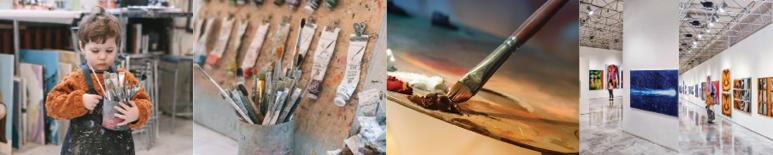
This month we are privileged to learn from Lindsay, an artist with many years of experience both in teaching and in conducting creative workshops … In addition, she continues to pursue her ministry as a prophetic artist … She creates divinely inspired works of art from nature, daydreaming of His impressions, pausing before His creation, breathing in His presence. Today she teaches us how to enjoy art and look beyond, always mindful of our Creator-Artist.
This is How I Pause:
I Communicate with a Work of Art!
Artists are gifted with the means to communicate, express, and convey information in a pictorial sense; they have a unique ability to impart visual information. They share a universal language.
Their vocabulary is built on the elements of art. It is through the language of brush marks, shapes, and colours that their creative and emotional content is conveyed. For example, the weight, strength, position, colour, length, and rhythm of a line (or a series of marks) has some bearing on the interpretation and meaning of whatever is communicated. Harnessing their expression, their clarity of vision is based on the principles of design, namely: balance, rhythm, and emphasis.
Worthy of consideration is the fact that no brush mark made on canvass is without heartfelt intention!
An artist’s visual language carries more abstract and paradoxical nuances than the spoken language can possibly convey. It is akin to poetry … artists are visual poets and their artistic language or their “visual voice” is collated from their understanding of art theory, their personal style, their favourite subjects …
Ultimately God is the initiator and orchestrator of the whole creative and artistic process. From this Divine, Creative Source everything will flow.
“He (God) is the fashioner of all things …” Jeremiah 10v16
Not all created works of art bring glory to God, but those of us who honour Him, understand the true purpose of art. We are not merely picture making, decorating, or creating art for our pleasure. Ours is a visual voice in God’s hands with a purpose to deliver a true message, sincerely created and one that would always point others to Him. This is our Creator at work!
The key to communicating with a work of art is to pause, linger, look and really observe, sense, breathe in the details, including … the directions of lines in relation to others, lengths and angles of lines, negative spaces, light and dark tones, sizes of shapes, edges and spaces.
Conversations and communications with art inspire breathing moments in reflecting on life as the artist experiences it and as our Creator-Artist knows it! Responses are easily triggered as one pause and ponder before a work of art … life-questions surface from secret inner places … memories are stirred … we tune into to what we think we know, but in conversations with the Friend-voice of God we hear even more … we tune into what we never knew before … here the Holy Spirit is invited to speak through this visual aid before us …
The ‘eye’ of the layman must reason as a technician and as a philosopher, discovering great aspects of things in the painting they are pausing to enjoy. The observers’ eye, grafted onto their heart, in tune with the language of art, reads deeply into the bosom of the artist and their creation.
As you linger with a painting ask yourself these questions … what am I looking at and seeing, what I am feeling, what is the artist saying, what do I want to say about what I see …
Don’t be fooled or rushed while appreciating or communicating with a work of art. Don’t be distracted by your logical-left-brain saying, “it knows, it’s seen it before”. PAUSE, LOOK and then DECIDE to feel. Focus and notice visual information, like colour choices and consider how the artist has instinctively used colour.
Colour is a special ingredient through which an artist communicates. Its personal meaning and purpose differ from artist to artist. Colour recipes and a unique approach with colour will add a certain distinction and peculiar expression or character to an artist’s style.
Understanding their use of colour can be accomplished by answering the following questions and comparing their colour choices with old and modern masters in the history of art:
- Is the use of colour largely symbolic, working as a message carrier? Like Gauguin, Matisse, Cassatt, Bosch, Botticelli, Munch, Redon, Miro, Klimt
- Is the use of colour largely expressive or emotive and exaggerated, playing on feelings? Like Delacroix, Rubens, Van Gogh, Vlaminck, Derain, Beckmann
- Is the use of colour largely descriptive and naturalistic, capturing forms through its values? Caravaggio, Rembrandt, Hals, Ingres, Constable, Cezanne
- Is the use of colour largely aesthetic, showcasing the poetic beauty in nature? Like Bonnard, Monet, Degas, Turner, Millet
- Is the use of colour largely pictorial, working in relation to other colours to create emphasis, rhythms or balance in design? Like Bruegel, Hockney, Hassam, El Greco, Michelangelo
- Theorists and artists recommend balancing hues with their complements; values with their opposite values; intensities with opposite intensities; areas of strong colours with areas of weak colour; large areas of colour balanced by smaller areas; warm colours balanced by cool.
With this in mind, choose an original work of art from an art gallery that you can critique using the following headings. I would suggest you study a real work of art rather than an image from the internet.
- TITLE OF THE WORK OF ART AND ARTIST
- COLOUR: Are the colours bright/strong or muted/quiet? Are the colours various/ colourful or similar/related? Have the colours been used symbolically? If so identify what the colour message is.
- TEXTURE: Is the texture evident/tactile or brushed/lively or smooth/shadowy? Is the colour conveyed in broken impressionistic strokes or applied in thin uniform strokes? Identify the sensations conveyed through the combinations of texture/brushstrokes.
- TONE (lightness/darkness): Is the tonal range muted/harmonious/ordered or contrasted and dramatic? What “impression” does this convey? Does the light shimmer with paint effect or is it modulated to suggest form?
- SHAPES: Are the shapes organic, inorganic, or abstracted? Do they fill up the space proportionately or are they disproportional to the space? Is the background space crisp/clear/shadowed/shallow/deep/interesting or abstracted?
- INTERPRETATION: What meaning/story is being portrayed? Can you relate to the artists’ expression? Do you like what you see? Can you explain why? Can you judge whether it is a skillful piece? Would you like to view more of the same work and find out more about the artist? Have you gained some insight into an artistic process? Will you pause again before another work of art and linger in the communication between artist and self?