March Week 1
This is How I Pause: I Connect With God Through Doodling!
Lindsay is an artist with many years of experience both in teaching and in conducting creative workshops … In addition, she continues to pursue her ministry as a prophetic artist … She creates divinely inspired works of art from nature, daydreaming of His impressions, pausing before His creation, breathing in His presence. Today she shares with us how she connects with God.
This Is How I Pause:
I Connect With God Through Doodling!
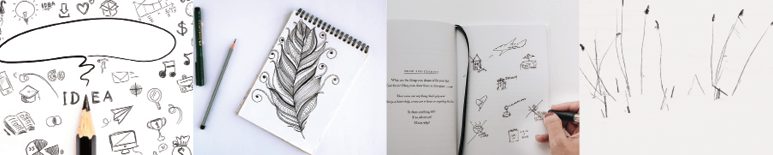
I was born in an era when telephones were plugged into a phone jack, where the mouth piece could be held in the crook of your neck and tilt of your head, more often than not my fingers were free and with pencil in hand I doodled through various conversations…
Doodling allows us to incubate thoughts while “chatting”. They are in essence wondering lines taken for a walk through our subconscious meanderings. They help capture our insights that are partly “seen” and “felt”. Through this naive process, we draw, we indulge our senses … layers of drawn-insight, once cloaked with vagueness, come to light in a freeing-messy-manner through lines that are as unique as a persons’ signature.
The really precious conditions for doodling are … to pause and breathe … to let the mind wander and to day dream …
Be still and consider for a moment … when last you indulged in the act of doodling?
Doodling is an invited right brain activity that surfaces when the logical, left brain is otherwise occupied and it can even lead to something inspirational! Like “mind-mapping”, where information once subconsciously realized is amplified … in the sense that something which was once vaguely perceived now becomes a concrete thought, captured with lines or skeletal forms.
We conceive in a moment, becoming aware of and discovering more about the world around us. Sensory information is comprehensible … doodles can be “translated” … it is here a person makes their doodles their own.
To doodle well, requires a sense of awe and a profound realization, that there is more to life than meets the casual glance! Imagine doodling in the company of our Creator God, what inner thoughts could be revealed through the power of the Holy Spirit? Doodling is revelation made visible, seeing something that doesn’t exist already! I invite you to bring your inner-doodles to life and that way be a playmate with God.
With a small leap I would like to cover the ground between doodling and pure contour drawing.
Pure contour drawing is a creative exercise best done in rhythmical step with a snail … very, very slowly! Well suited for our pause-breathe-challenge. For reasons that are still unclear, pure contour drawing is one of the key exercises in learning to draw. Let us attempt a contour exercise ourselves through the inspiration and guidance from Betty Edward’s book, Drawing on the Right Side of the Brain …
“It is a paradox. Pure contour drawing, which doesn’t produce a “good” drawing (in students’ estimations), is the best exercise for effectively and efficiently causing students later to achieve good drawing. Even more important, though, this is the exercise that revives our childhood wonder and the sense of beauty found in ordinary things. The most important reason for this exercise is that pure contour drawing apparently causes Left brain-mode to “reject the task” enabling you to shift to Right brain-mode.” Betty Edwards
I have taken this exercise from Betty Edward’s book Drawing on the Right Side of the Brain, I quote: “Gaze at a single wrinkle in your palm. Place your pencil on the paper and begin to draw just that edge. As your eyes track the direction of the edge very slowly, one millimetre at a time, your pencil will record your perceptions. If the edge changes direction, so does your pencil. If the edge intersects with another edge, follow that new information slowly with your eyes, while your pencil simultaneously records every detail. An important point: Your pencil can record only what you see – nothing more, nothing less – at the moment of seeing. Your hand and pencil function like a seismograph, responding to your actual perceptions. Do not be tempted to look at your page – keep your eyes focused on your hand. Remember you are not concerned about whether the drawing looks like a hand. You want to record your perceptions.”
“If you experience painful objections from your L-Mode (What am I doing this for? This is really stupid) try your best to keep on drawing. The protests from the left will fade out and your mind will become quiet. You will find yourself fascinated by the wonder and complexity of what you are seeing. When that change takes place, you will have shifted to the visual mode and you will be “really drawing” and you will be in the correct mode for being creative.”
Acquiring perceptual skills and becoming adept in the “art of seeing” will set you head and shoulders above other “creative’s” – many of whom struggle to “see” as they are not in the correct mode for creativity. As your perceptual skills increase, your ability to create and even draw what you “see” will increase, and you will observe your style forming. Guard it, nurture it, and cherish it, for your style expresses your inner voice! As Edgar Degas says… “Art is not what you see, but what you make others see. We paint best that which is most familiar to us, we see best that which is new to us”
February Week 3
This is How I pause: I connect with God through Running
This is How I pause:
I connect with God through Running
Christopher and Jeanne Agenbag are missionaries who have left deep footprints in God’s Kingdom. On this life journey that took them through Europe, Mozambique, and Zambia, the Lord entrusted them with six precious children and now eight grandchildren. Today, Jeanne shares about the legacy of running they imparted to their children.
The Scotsman, Eric Liddell, became known at the 1924 Olympic Games as he unexpectedly won the 400 m race. Eric had a very unusual running style – his head so far back, that he could hardly see the track. He described his joy in the sport, with the following statement:
“when I run, I feel God’s pleasure!”
I grew up in a family who loved God and sensed even more of His presence when they hiked or biked. My parents both passed on an appreciation for the mountains and nature of our South African hometown, Stellenbosch. Dad often took us for long walks and deep conversations about the Creator of life and such beauty.
Music and movement became my joy and fulfilment. The opportunity to join a Worship dance group, allowed me to echo Liddell’s words – when l DANCE, I feel His pleasure. This focus had to adapt a bit, however, when my relationship with Christopher started. His delight was RUGBY and we had to develop new shared activities. We also felt a call to missions and moved often to places where you needed to keep yourself balanced, adaptable and active.
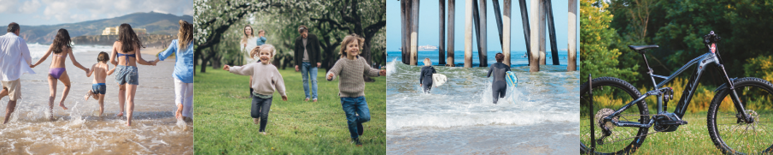
RUNNING became our life-long option – allowing us to enjoy the most breath-taking experiences. We treasure the unique memories of running in European forests, London’s parks, Canada’s national woods, Mozambique’s humid countryside, Zambian natural savanna areas as well as South African trails.
Regular running requires discipline, but it also adds some side-benefits. We knew this mutual interest and the gift of good health was God’s grace, but we also experienced that it brought balance, relaxation and such shared joy. I often remembered the words of a beloved childhood friend and pastor:
” We have only one will, and when we break it in one aspect, it is weakened in all areas.”
This warning also holds an implied promise: a disciplined will, can have a broader impact. We both felt that our foundation has to remain our intimate walk with God, a dedicated daily study of His Word and commitment to a pattern of prayer.
When the first of our six children were welcomed into our lives, we realized the challenge it may bring to any existing schedule. Finding new routines, taking turns and sometimes skipping exercising, gradually helped us to figure out a different, but sustainable way. We introduced some variations (like using an indoor exercise bike) and having a flexible attitude and willing heart to adapt and remain content. The children obviously were aware of our values, patterns and habits and as soon as possible, we would introduce them to these.
Each child would receive their own ONE YEAR BIBLE to encourage them in their own relationship with and study of The Word, or join us in family devotions. Then, when they were ready, a birthday gift of running shoes would invite them to join us in jogging. The children all embraced these invitations in unique ways, and gradually developed their very own style. The girls mostly enjoyed the challenges, but establishing a sustainable program, is never too easy. Home-schooling offers benefits and some areas of frustration – you usually cannot form any proper sports team or have the satisfaction of competition or achievement. Sometimes our exercise programs included tears and discouragement as well.
Habits are not set in single efforts, but the reward and joy of a goal achieved, helped all of us. Some developed a motivation chart and determined specific targets and by now we all run – only the younger ones much harder, further and faster than their original trainers.
A deepening sense of gratitude has also grown over the years as we appreciate the numerous gifts our Father has entrusted to our family. He has drawn all of us to Himself, allowing us to share His inheritance, sustained by His hand and kindness.
How we love Him for His grace. How we thank Him for the heritage of children who embrace the most precious baton we could ever pass on: to walk with our LORD.

February Week 1
This is How I Pause: I connect with God in Nature
This is How I Pause:
I connect with God in Nature
The Bible is an outdoor experience. From Genesis to Revelations, it is crammed with God moments, taking us from the Garden of Eden to the great tree at Mamre, from the burning bush to the Red Sea, from years of wildernis wanderings to a promised land overflowing with milk and honey. Similarly, the writings of the prophets leaned heavily on pastoral images for the Israelites of old were an agrarian people, thus their writings are rich in images of shepherds and sheep, planting and harvesting, fig trees, summer fruit and wine presses. Once in the New Testament, Jesus, born in a stable, faithfully walked the dust roads of Palestine, fished with his disciples, preached on the hills along the Galilean lakeshore, prayed on the Mount of Olives, was crucified on a hill outside Jerusalem and his body put to rest in a garden tomb.
Each and every one of these moments played itself out against the backdrop of the greatest 3D canvas every imagined! No movie screen, princely court or sumptuously decorated theater can ever compete with the vast universe, the myriad of stars and endless galaxies, the great mountains, grand canyons and endless plains God created as backdrop to the greatest story ever told in the history of man – the coming of Jesus Christ!
While I by no means want to romanticize life in Biblical times, I am very aware that life for most people in 2022 is no longer an “outdoor experience”, but a complicated maze to figure out, a nonstop buzz of activity and noise, a day-and-night marathon of connectivity and performance. All this can be attributed to the Third Industrial Revolution that began in the late 1900s, characterized by the spread of automation and digitization, all which brought us to the brink of the Fourth Industrial Revolution with more promises of disruptive technologies and trends.
Added to this is the fact that since roughly 2007, for the first time, more people in the world live in urban than in rural areas. Most of these are highly-dense cities that has transformed the way we live, work, travel and build networks. By 2050 it is projected that more than two-thirds of the world population will live in urban areas where living standards tend to be higher — the reason why people tend to migrate there as they become richer.
In many ways, I have experienced all of the above. From a rural upbringing in South Africa to living in London, Jerusalem, Chennai and Dehli at times, to years of village life in the remote Northern province of Zambia, I now reside in the beautiful town of George, in the Garden Route district of South Africa. In all of these settings I have experienced God, felt His prompting, heard His voice and saw Him change and transform lives.
Yet, when I need to pause and breathe, it is to the desert that I retreat or the seaside where I migrate. It is here, on a bike, beside a lake, on foot or with a book where I see, smell, hear and feel God afresh. The activity is not as important as the interruption to my daily routine, the change of scenery and connectivity with other parts of God’s creation, for it is here, away from everyone and everything that I can really pause and breathe. Whether it is the vibrant colours of autumn, the dewy petrichor of the post-rain afternoons, the light breeze from the salty sea, or the call of the Egyptian geese at sunset that arrests my senses, the outdoors has a way to revive and renew all that is dead and dull within me.
This habit has been instilled in my children from a young age and our whole family enjoy various forms of outdoor activities, both on land and sea. We understand that it is here, away from all that is artificial and contrived, that the ancient rhythms of life as God intended, can be re-discovered. Created to worship and work, we now worship work.
It is only as we pause and ponder, that we will be brave enough to evaluate our activities, viewing them from God’s perspective and calling them what they really are. Seven years ago, almost to the day, that is what I did. As a result, my husband and I resigned our jobs in the city, packed up our busy and important lives to re-imagine our purpose with God and our children in a new season. Determined to embrace a slower pace we wanted to show the kids what counts most in God’s kindom, for a life that truly honors Him, is rich in the things of God – worship, wonder, wellness, and whole-hearted fellowship – even in the workplace as we participate in what God is doing in the world.
May you be inspired this week to practice the pause and trace the fingerprints of God through the great outdoors. Thus, inspired and refreshed, you will experience a greater desire to worship God, a fuller understanding of what it means to be still in His presence and a fresh yearning to surrender to His Lordship.
January – Week 3
Soaking in Solitude & Silence.
Pause & Breathe Challenge
Silence & Solitude
This is how I pause: I soak myself in Silence & Solitude
Our first year as a married couple, my husband and I lived in the outskirts of Jammu, a great sprawling city in the North of India with five-hundred thousand people. We just received an outreach from South Africa. As they returned home to family and familiar foods, bearing beautiful gifts and news of a great world in tremendous spiritual need, we returned to our one-room dwelling with carton boxes for windows and no bathroom. Christmas was at hand, and we decided to fast during the seven days until New Year. We wanted to seek God, not only for Himself but also for our time in India and our wider calling as missionaries.
It was in many ways the easiest fast we ever did, as we spoke little Hindi, knew no one and found the local food foreign and spicy. It was in this time of silence and solitude, cut off from loved ones, our home office and the rest of our team in southern India that God started to speak to us about our specific assignment for the years to come.
This discipline of withdrawal from the world and all that tastes and sounds familiar is rarely written about, encouraged by the church or discussed by the mainstream media – always ready to feed our indulgences. If we want to be spiritually strong and healthy, able to separate the important from the trivial, the worthwhile from the waste,[1] it is imperative that we intentionally seek out and search for opportunities to become active listeners to God.
Instead, our lives are endlessly filled with noise, activity and people. Whether at home, work or play, we mostly embrace company and thrive in community. With billboards shouting at us, bosses directing us, the radio informing us, and social media entertaining us, we are suckers for information. Whether in person or online, we all, to a certain degree, have itching ears, surrounding ourselves with a significant number of ‘teachers’ who say what we want to hear, filling up on spiritual junk food[2] as Eugene Peterson calls it.
Yet, God wants us to enlarge our spiritual centre, growing stronger in the inner man, bringing order to our inner sanctuary, for much confounds us, both in the world at large and our own private lives. Sadly, my default seems to be the axiom; the more confused I am, the faster I go, instead of when in doubt, pause. Thus, I am again challenged to find time to retreat more regularly and seek silence more frequently in this new year.
As we are sitting at the feet of friends and Christians this year, older and younger people who have all found unique and creative ways to pause and reboot, my sincere prayer is that we will learn, grow and hold each other accountable. Richard Foster reminds us that simply to refrain from talking, without a heart listening to God, is not silence, for silence and solitude is to see and hear – both God (and others) better.
Depending on our season, we may either be encouraged by today’s message or disheartened by it. Therefore, whether you are a homemaker, a homeschooler or a working Mother, having young children or older ones, it is my prayer that there will be no condemnation, only conviction. As I look back on my life, there is one piece of advice I have cherished and implemented most regularly – to always be on the lookout for what Richard Foster calls ‘little solitudes’. Whether these moments are Sabbath seconds, Sabbath minutes, Sabbath hours or Sabbath days, I pray that you will actively seek them out this year! It is a most excellent way to redeem time, as Paul urges us to do and find new joy and meaning in the humdrum and ordinary routines of our lives.
Remember
- Without silence, there is no solitude.
- Inward solitude has outward manifestations.
- Control rather than no noise is the key to silence.
- Going away from people helps us to be truly present with people
- The purpose of silence and solitude is to see and hear.
[1] Gordon MacDonald, Ordering Your Private World, p.151
[2] 2 Timothy 4:3 MSG
January – Week 1
Oh, to be large in soul-peace and rest!
Pause & Breathe Challenge
Silence & Solitude
Oh, to be large in soul-peace and rest!
When God pressed the ‘pause’ button in March 2020 and most of the world came to a screeching halt, we were mostly unprepared. Covid19 affected every continent and nation, every city, town and village, and every family. A stop to the scramble for more of everything except Jesus was sudden and unannounced. New words were coined, like ‘Blursday’[1], while others rose from obscurity to everyday lingoes, like pandemic, quarantine and lockdown.
Not since the great wars has the world been so dramatically impacted or digitally connected. Despite new avenues to communicate and connect, many felt muffled, muted, and mystified by the global shutdown. The elderly, for one, suffered immensely, as did those already living alone.
With a few exceptions here and there, most tolerated their “new normal” rather than embrace it. Surviving more than thriving, frustration built up in all sorts of ways. In June 2020, I read about a Japanese theme park that asked guests to ride its roller-coasters in silence. In the instructional video, two well-dressed men, wearing face masks, ride one of the park’s roller-coasters in complete silence. Afterwards, a Japanese language message appears, encouraging participants to “please scream inside your heart.”[2]
In more ways than one, it summarized the world’s emotional state. Wellness became a global concern as people tried to make sense of all these disruptions, the uncertainty it brought and the loss they experienced on so many levels. In the midst of it all, I experienced God prompting me to REST, WAIT, POTTER, PLAN, CREATE and BE! I soon discovered that I was not alone on this journey, so this year’s challenge was born.
I believe God’s call to pause after two years of constant change and uncertainty is an adventure not to be missed, a call we must not ignore. As there are so many dimensions to wellness, I trust God to show you where to put your focus.
Physical: exercise & health
Emotional: healthy thoughts & feelings
Spiritual: church, cell group & Bible reading
Intellectual: takings breaks, learning a new skill
Social: hobbies, interaction & hospitality
Occupational: balance, work, boundaries, saying No
Financial: be generous with your money
For optimal wellness, we need to be self-aware, which can only be gained when we take time to reflect. As we find new avenues to pause and breathe, we will recover, make peace with our losses, celebrate our victories and find a new rhythm. As we re-focus on God and celebrate His goodness, we will naturally overflow in thanksgiving regardless of our circumstances.
It takes courage to say yes to rest and play in a culture where exhaustion is seen as a status symbol. – Rene Brown
[1] theconversation.com › coronavirus-has-led-to-an-explo..
[2] www.ctvnews.ca › lifestyle › a-theme-park-s-plea-for-sile.